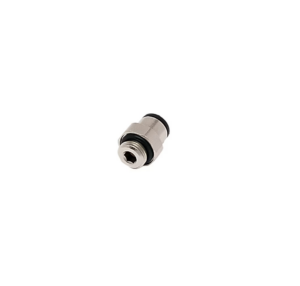
Parker Legris LF3000 6mm - M7 Metric Male Stud Fitting
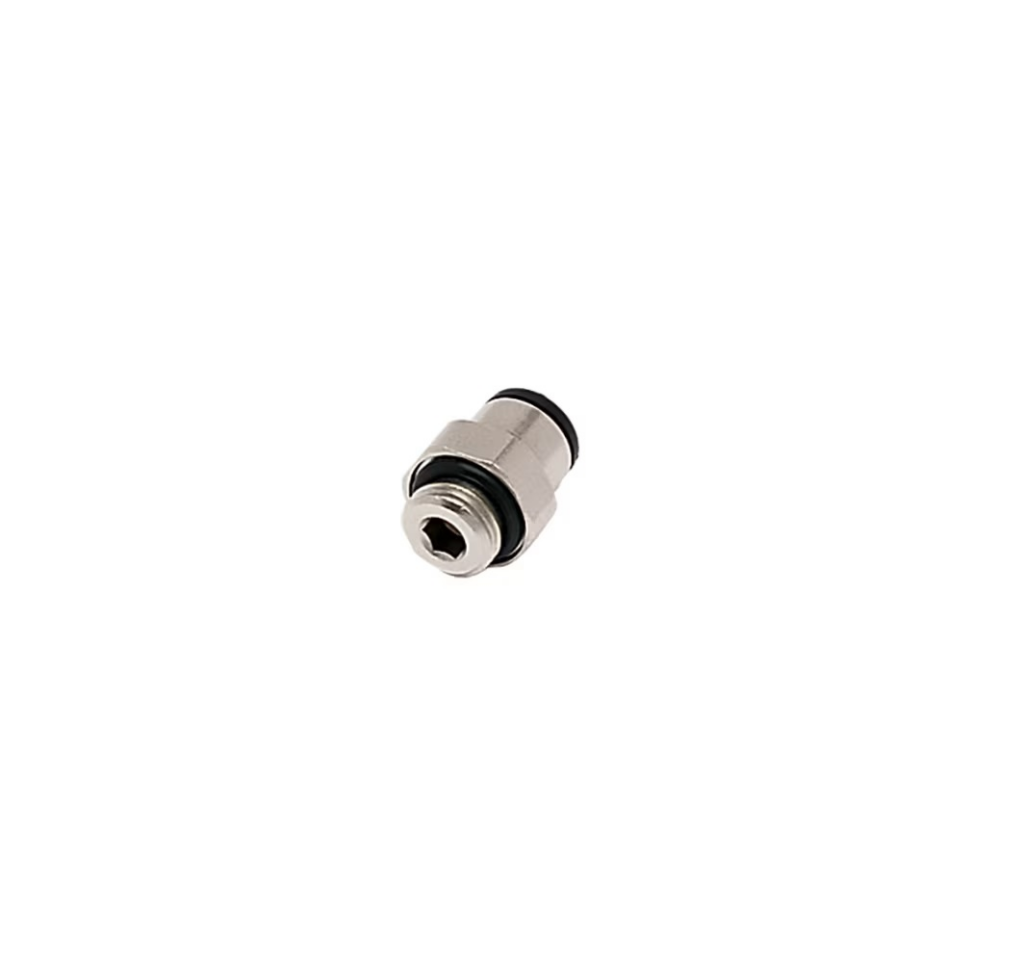
Parker Legris LF3000 straight, 6 mm tube to M 7, technical polymer, vacuum to 20 bar, -20 °C to +80 °C.
Overview
The Parker Legris LF3000 6mm – M7 Metric Male Stud Fitting is a straight push-to-connect coupling designed for low-pressure pneumatic and fluid applications in off-road machinery and automotive systems.
This fitting excels in applications requiring reliable, maintenance-free connections without tools or fittings adjustment. The 6 mm tube connection pairs with an M7×1.0 metric male thread, making it ideal for instrument air, process control, and general pneumatic distribution where simplicity and repeatability matter. Constructed from nickel-plated brass with stainless steel gripping rings and an NBR seal, the fitting withstands operating temperatures from –20 °C to +80 °C and maintains a vacuum rating of 755 mm Hg. The hexagon metric body (10 mm hex size) permits easy installation and removal in compact spaces.
Supplied in boxes of 10 units, this LF3000 series fitting serves industrial automation, food and beverage processing, and instrument air distribution networks across Europe.
Specifications
| Product Series | LF 3000® |
|---|---|
| Product Type | Pneumatic Push-In Fittings - LF 3000® |
| Shape | Straight |
| Configuration | Tube to Port |
| Connection 1 Type | Tube |
| Connection 1 Size | 6 mm Tube O.D. |
| Connection 2 Type | Metric Thread |
| Connection 2 Size | M7x1.0 mm Thread |
| Hex Size | 10 |
| Hex Type | Hexagon Metric |
| Body Material | Brass, Nickel-plated |
| Seal Material | NBR |
| Gripping Ring Material | Stainless Steel |
| Maximum Operating Pressure | 20 bar (usable from vacuum to 20 bar) |
| Vacuum Pressure Rating | 755 mm-Hg |
| Temperature Range | -20°C to +80°C |
| For Fluid Type | Air (Compressed Air), Other Fluids: Please Consult Us |
| Application | Textile, Robotics, Vacuum, Pneumatics, Packaging, Automotive |
| Specifications Met | ISO 14743, PED, RoHS, REACH |
| Weight | 0.005 kg |
| Quantity per Box | 10 |
| Catalogue reference | Parker Legris Rectus Catalogue CAT-EN (Europe, July 2026), p.14 |
Documents
Enquire about this part
The fastest way to get a price on this SKU is to email our quote desk — your reply lands with an engineer within 4 business hours.
Email a quote request Or use the quote form →